Photo gallery: real builds
Real benches, prototypes and projects. The simulations live in the experiment gallery; these are the actual hardware. Tap a photo to see it full size.
Sharing the research
Explaining the work in talks and poster sessions.
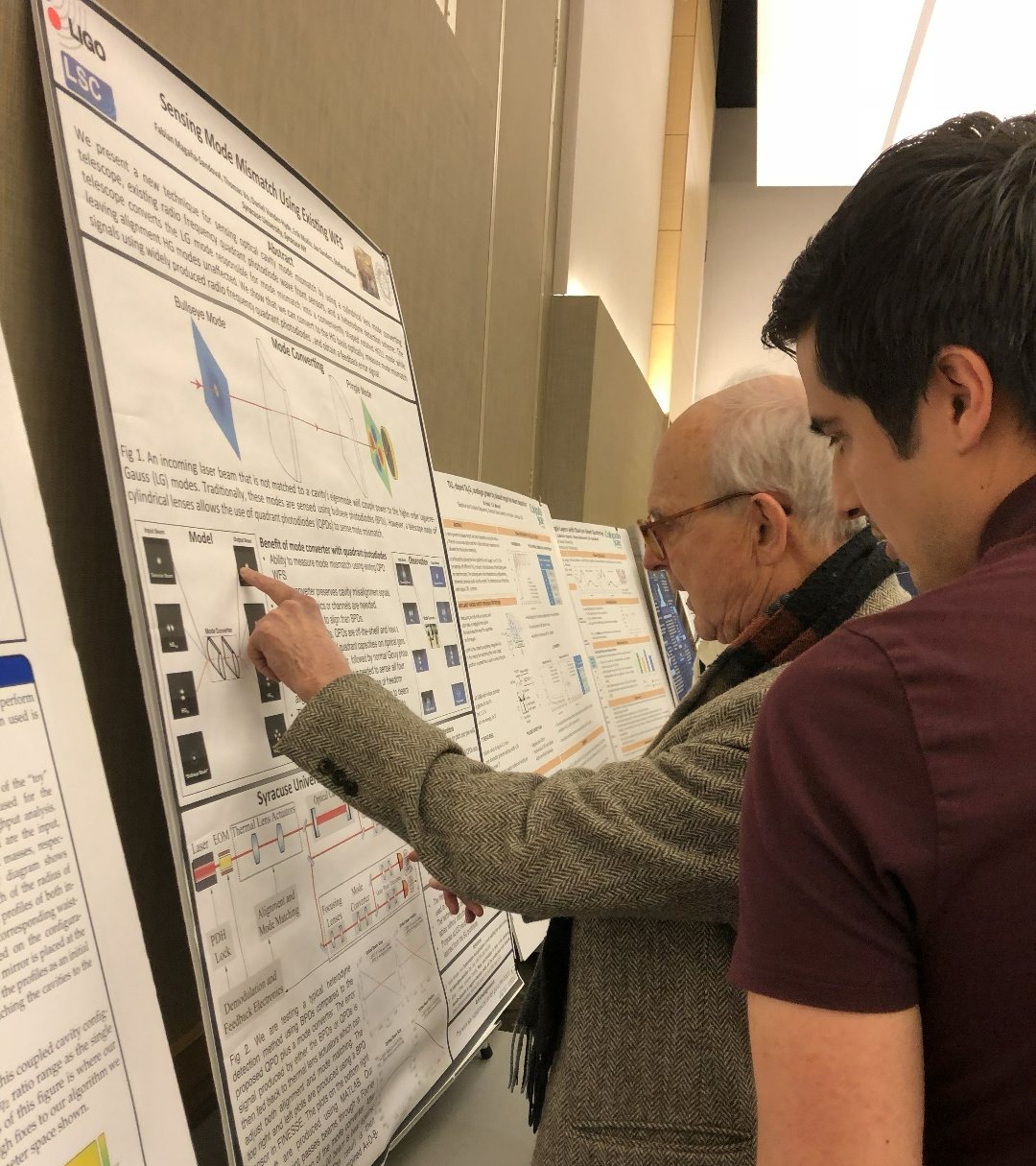
Walking Rai Weiss, 2017 Nobel laureate in physics, through my poster on sensing mode mismatch with a cylindrical-lens mode converter and existing wavefront sensors, around 2018. He approved!
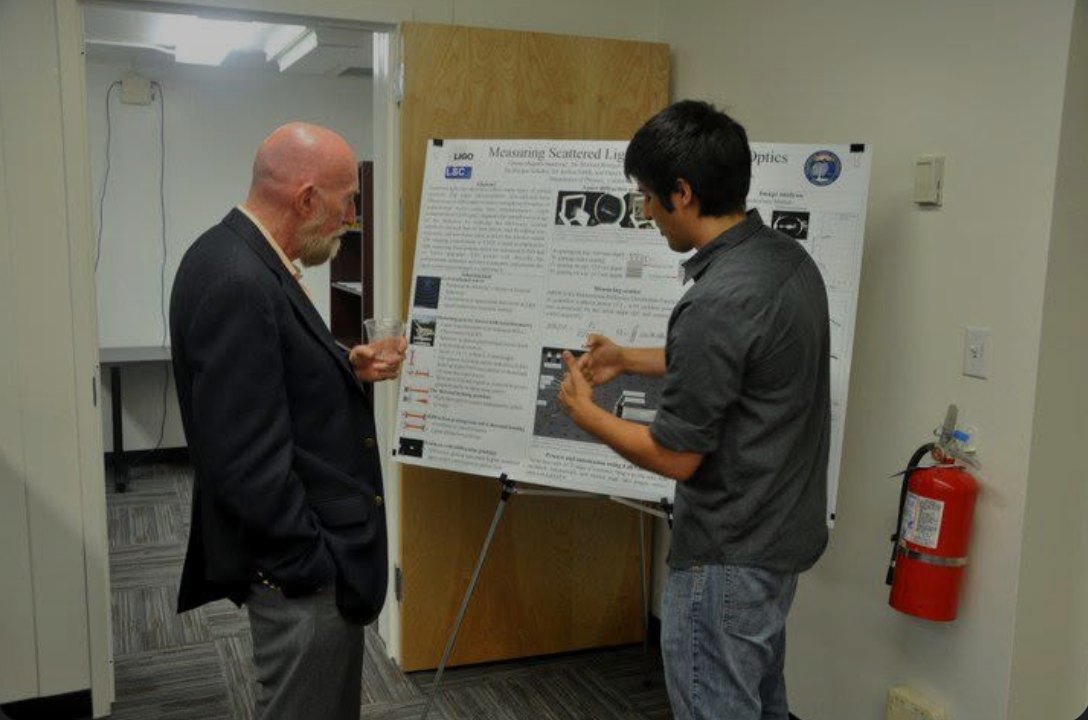
Explaining my research on measuring scattered light to Kip Thorne, 2017 Nobel laureate in physics, at the inauguration of the Gravitational-Wave Physics and Astronomy Center (GWPAC), 2012.
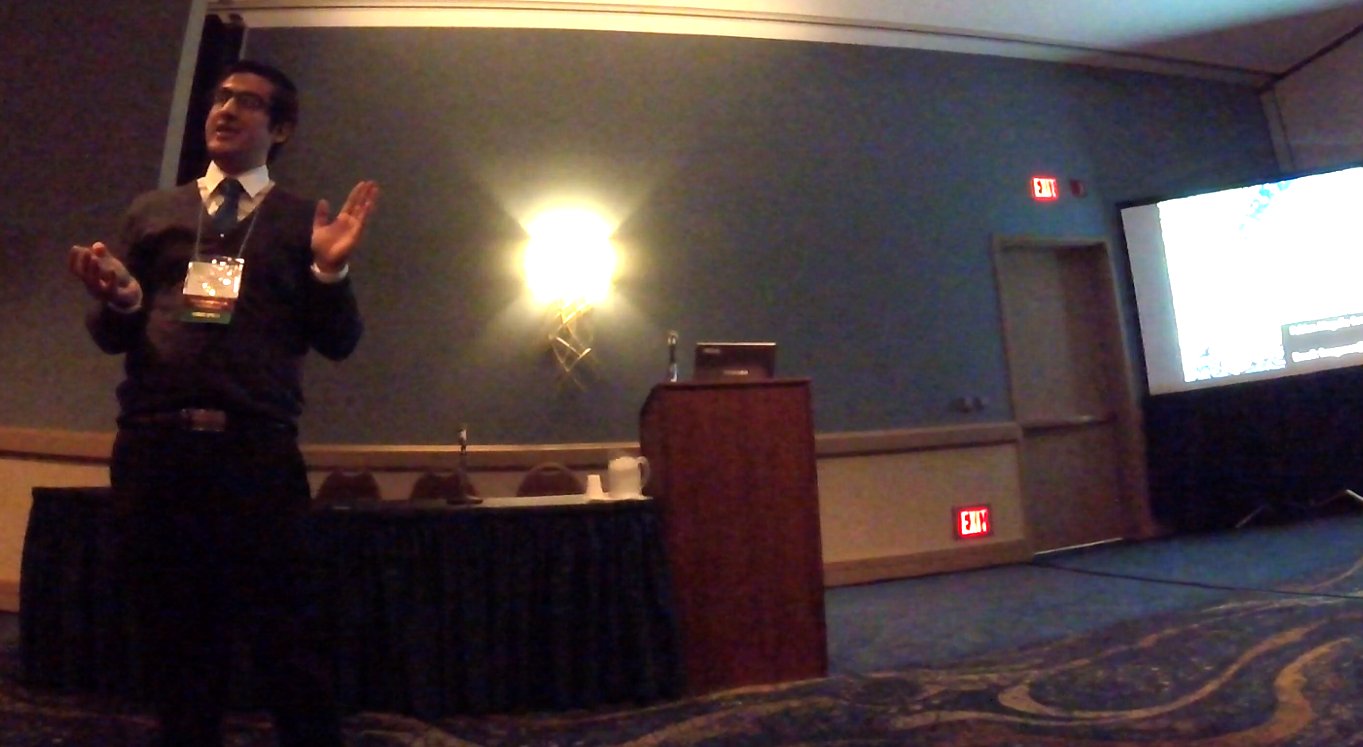
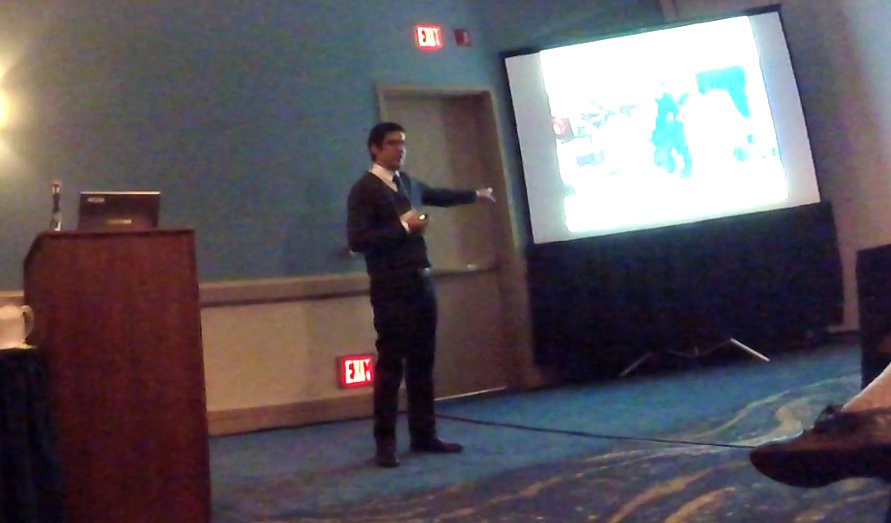
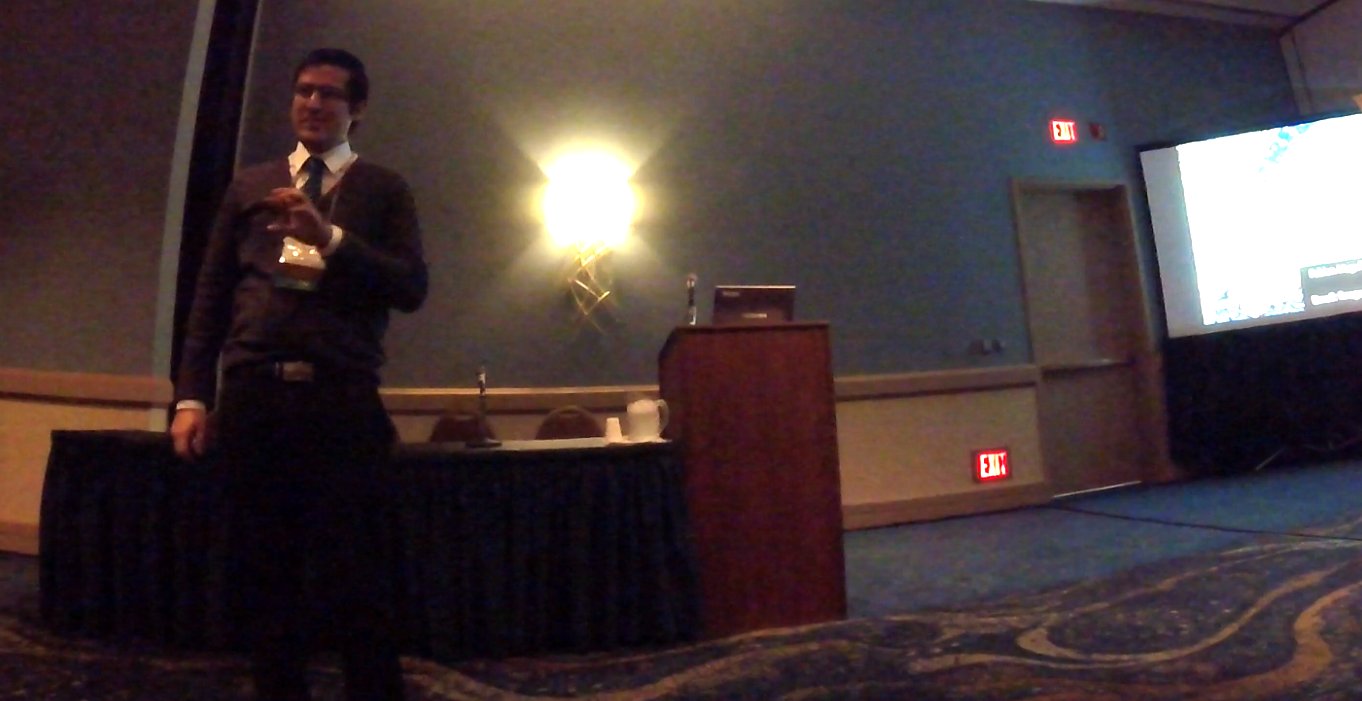
Presenting “Adaptive Mode Matching for the Output Mode Cleaner in LIGO” on behalf of the LIGO Scientific Collaboration. Slides (PDF) · More photos: the lab on screen, with the audience.
Syracuse University: LIGO alignment and mode matching
PhD research on alignment sensing, mode matching and feedback control for gravitational-wave interferometers.
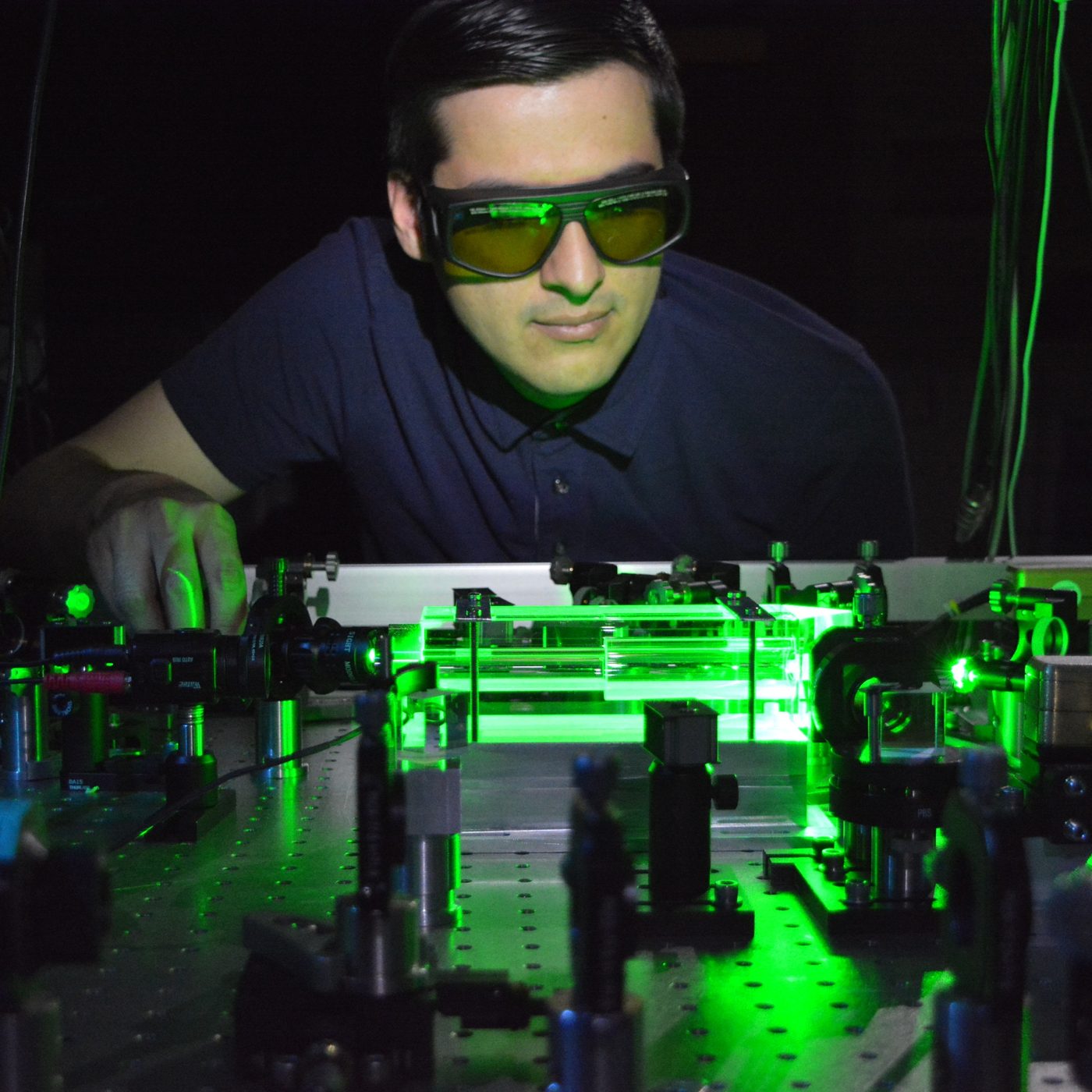
Me at my Syracuse table, with laser light glowing through the triangular cavity.
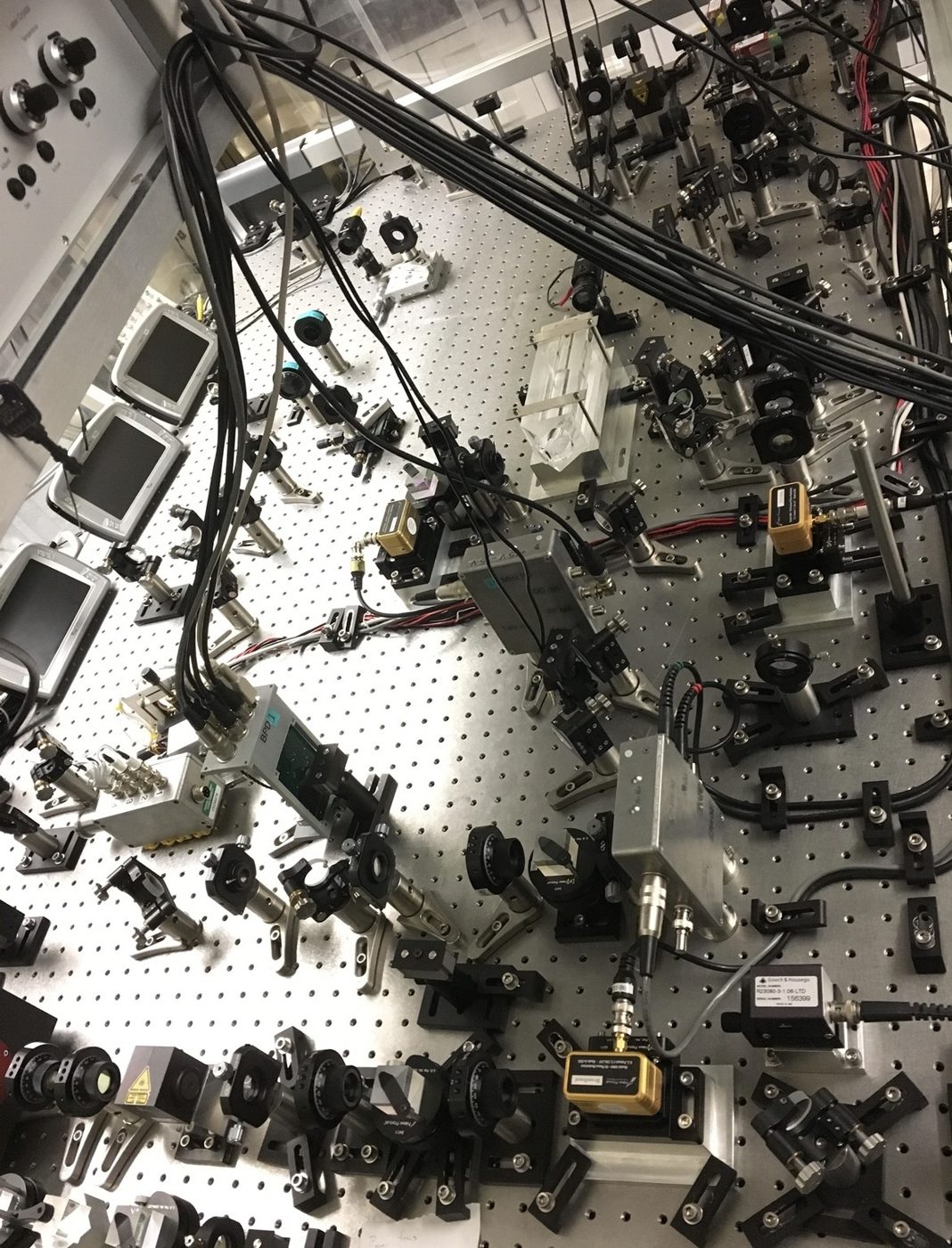
A triangular cavity, plus an adaptive-optics telescope that mode-matches the beam into a high-sensitivity linear optical cavity.
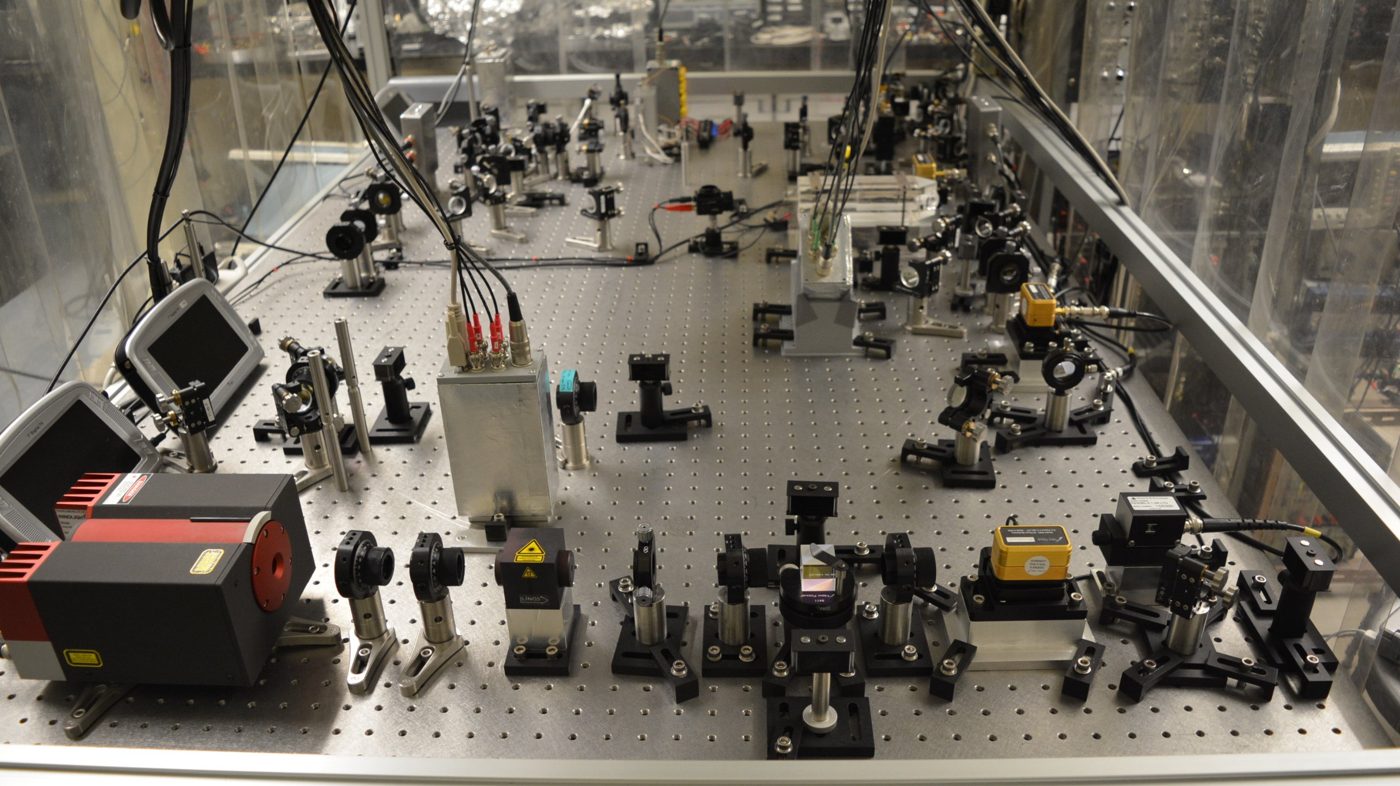
Laser heads in front, with the cavity optics, photodetectors and cameras running to the back.
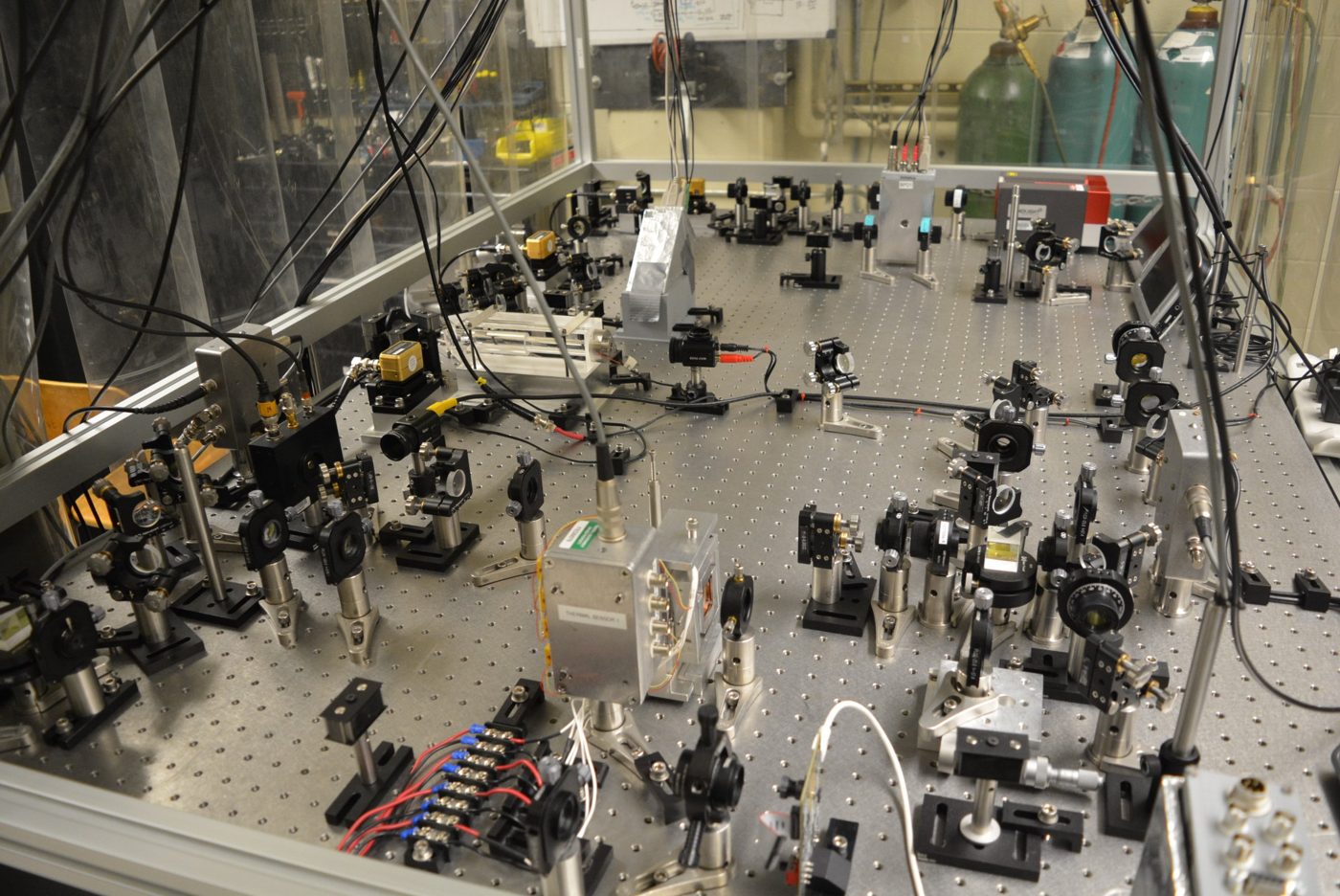
Steering mirrors, photodetectors and the covered cavity, wired out to the electronics rack.
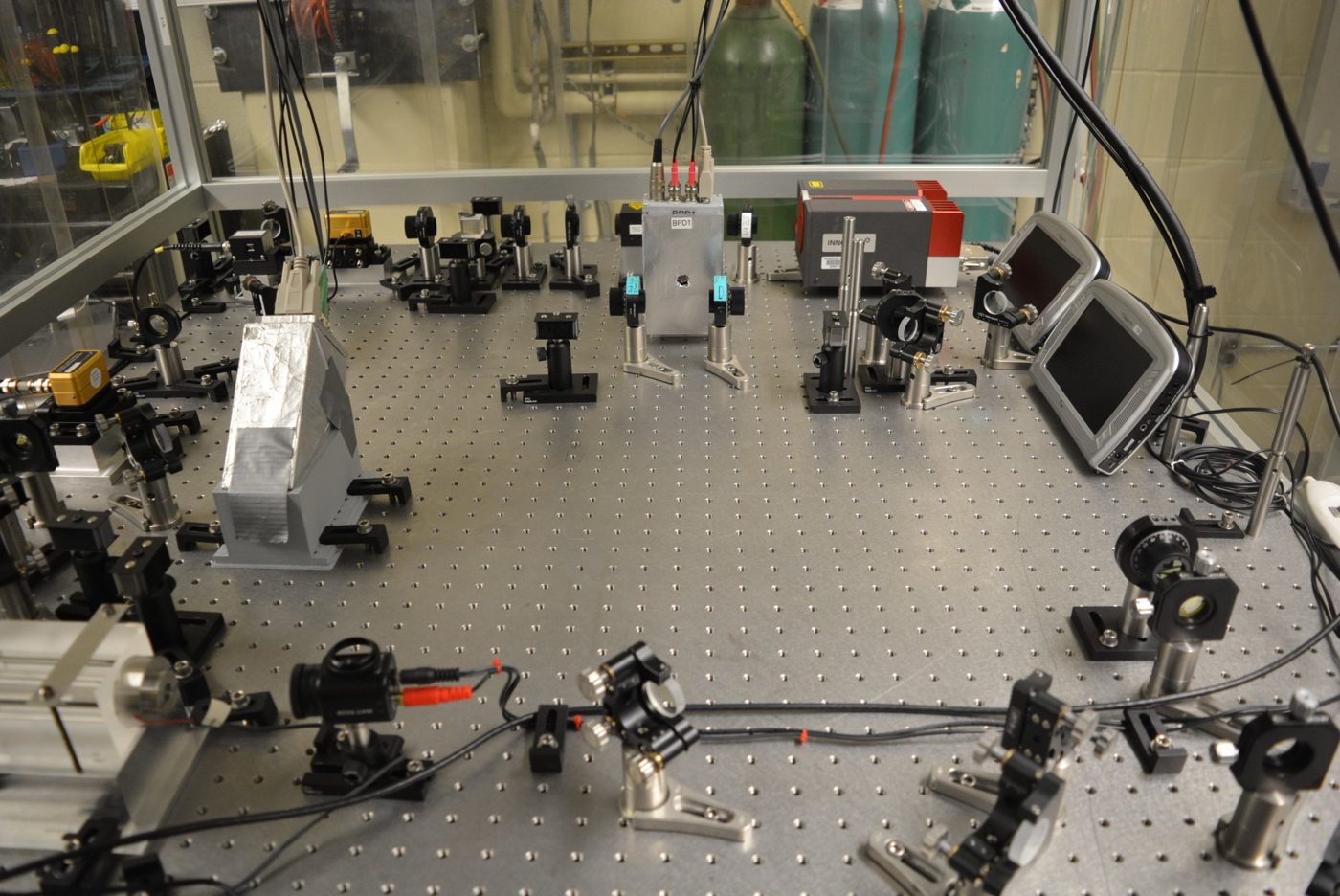
Balanced photodetector, beam cameras and monitors.
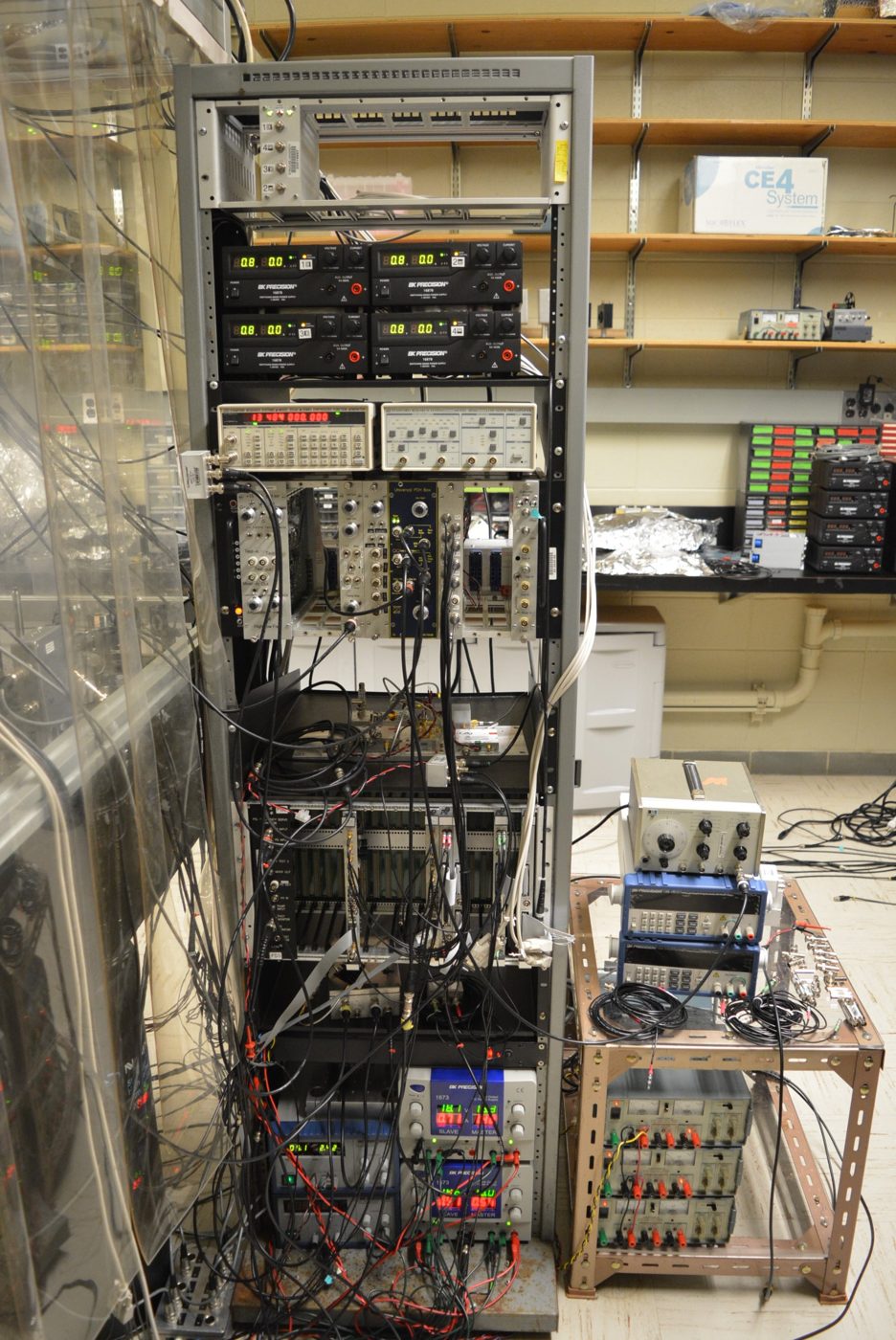
Power supplies, a function generator, a low-noise preamplifier and the locking electronics that keep the cavities on resonance.
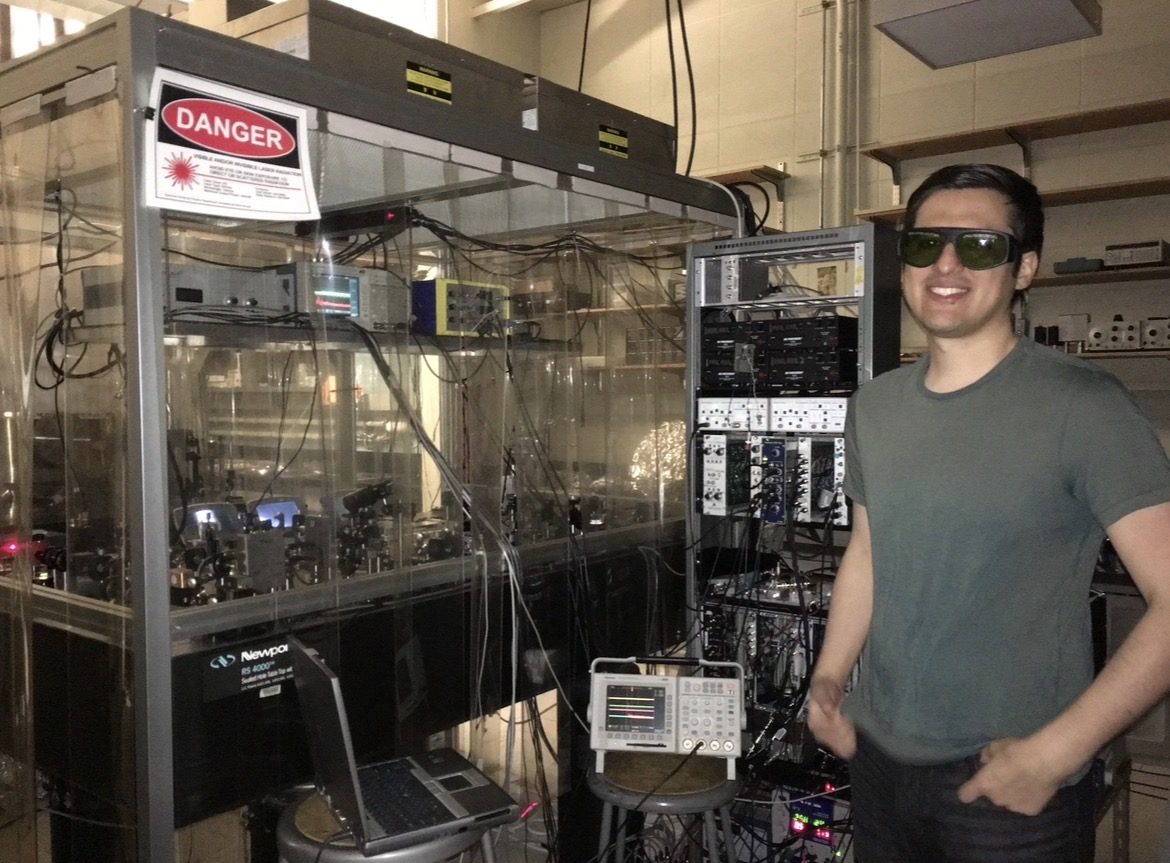
The control and readout rack beside the enclosed optical table.
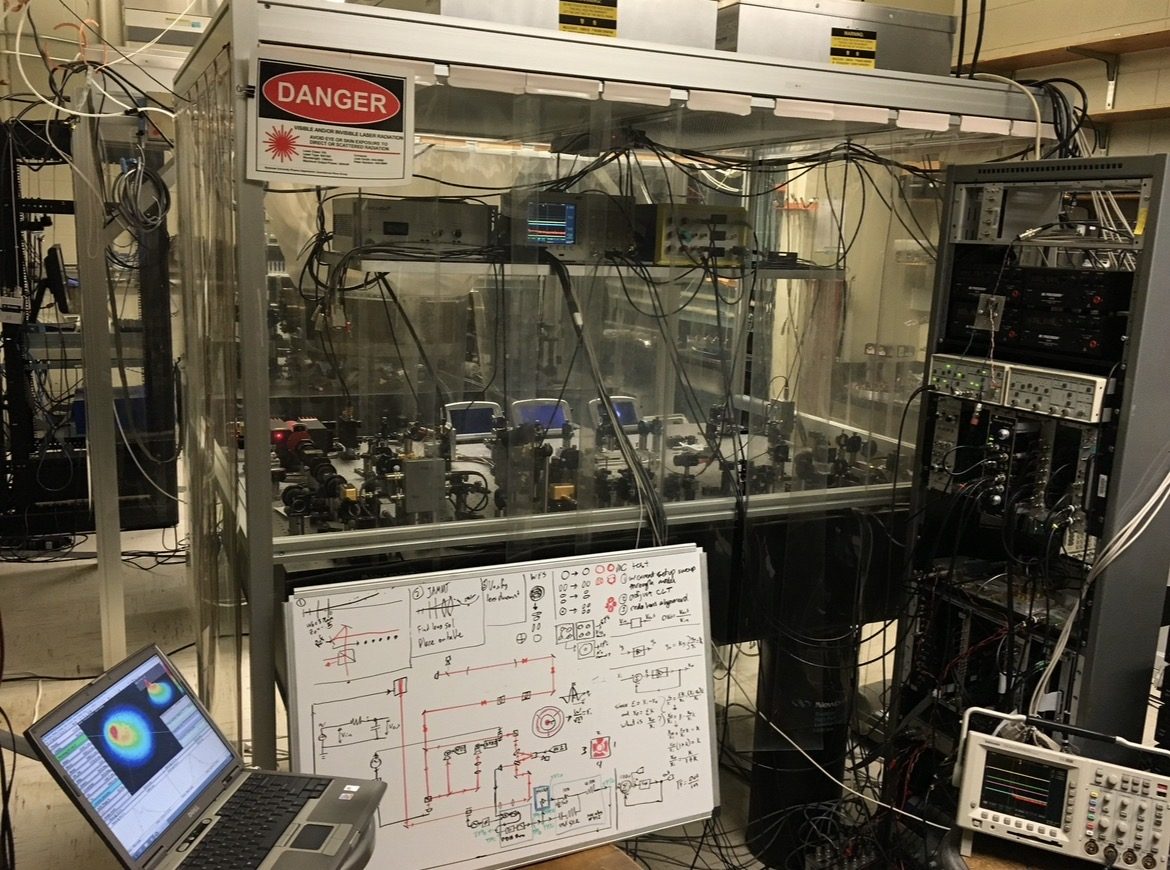
The enclosed bench, with the control loop sketched on the whiteboard and a live beam-profile image on the laptop.
Postdoc: University of Florida
Electro-optic beam steering, spatial light modulators and fast cameras as beam phase sensors.
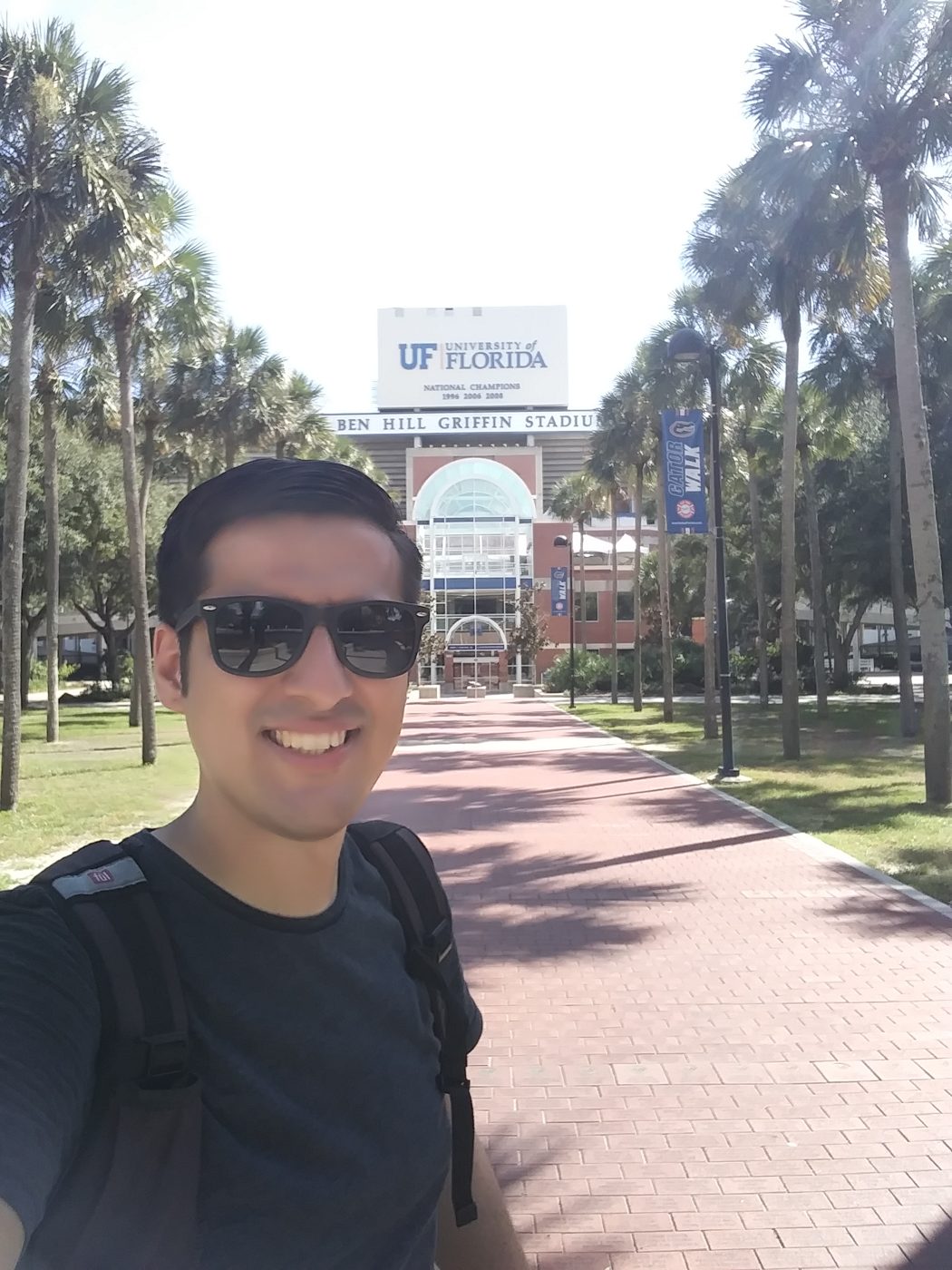
Gainesville, during my postdoc.
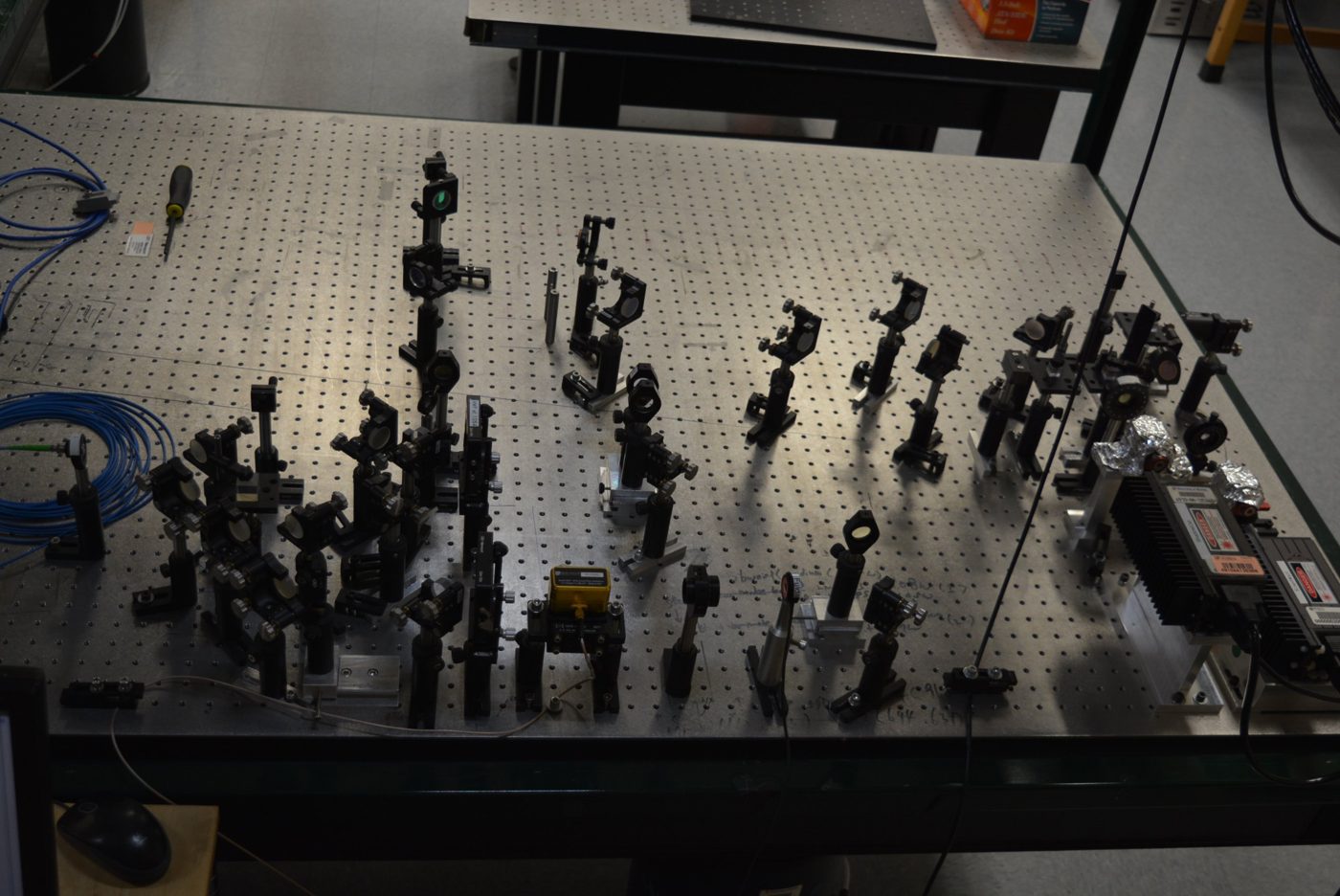
Lasers, fiber and steering optics set up to test a commercially available high-speed camera as a beam phase camera.
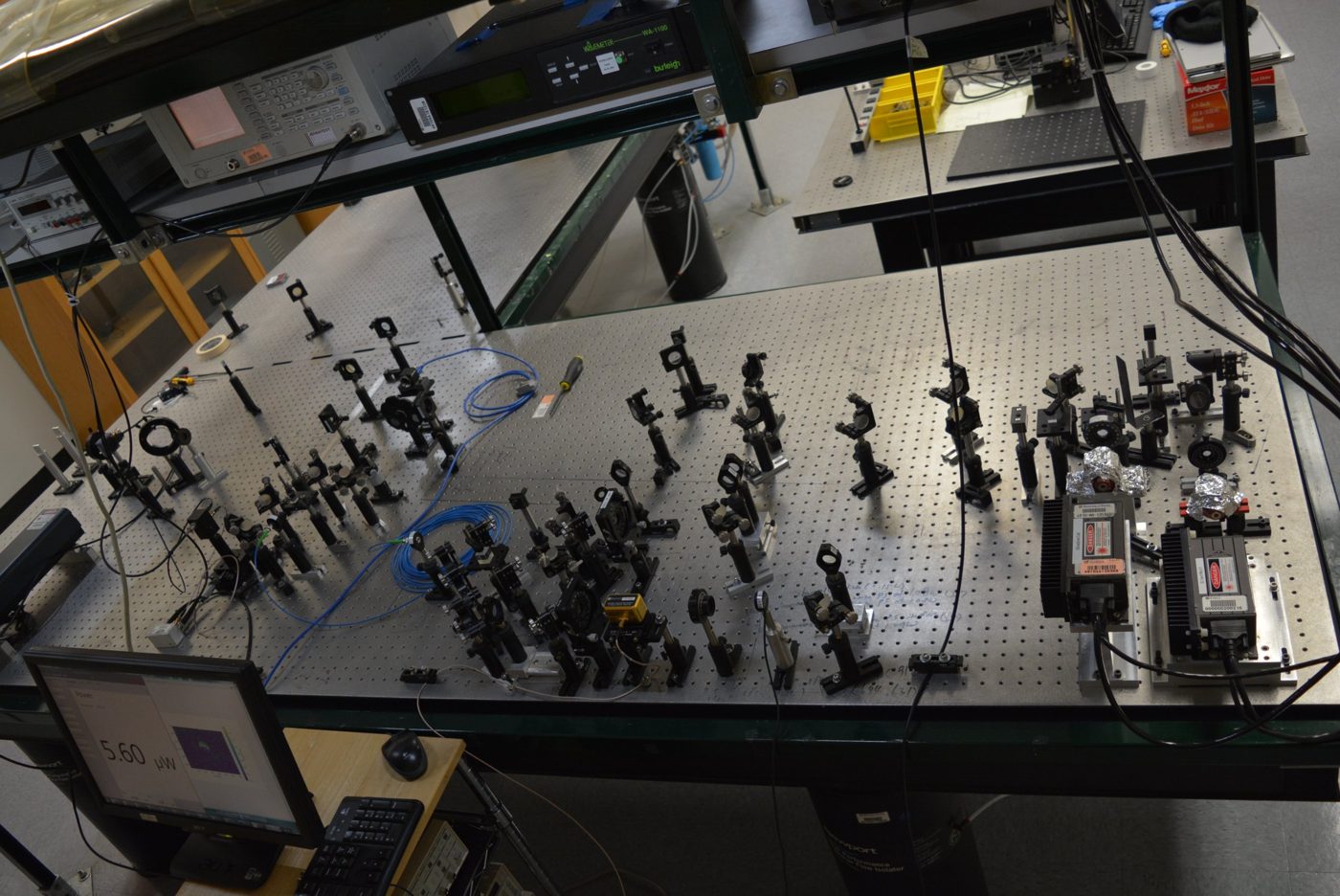
The same phase-camera setup, with a wavemeter and spectrum analyzer on the shelf above.
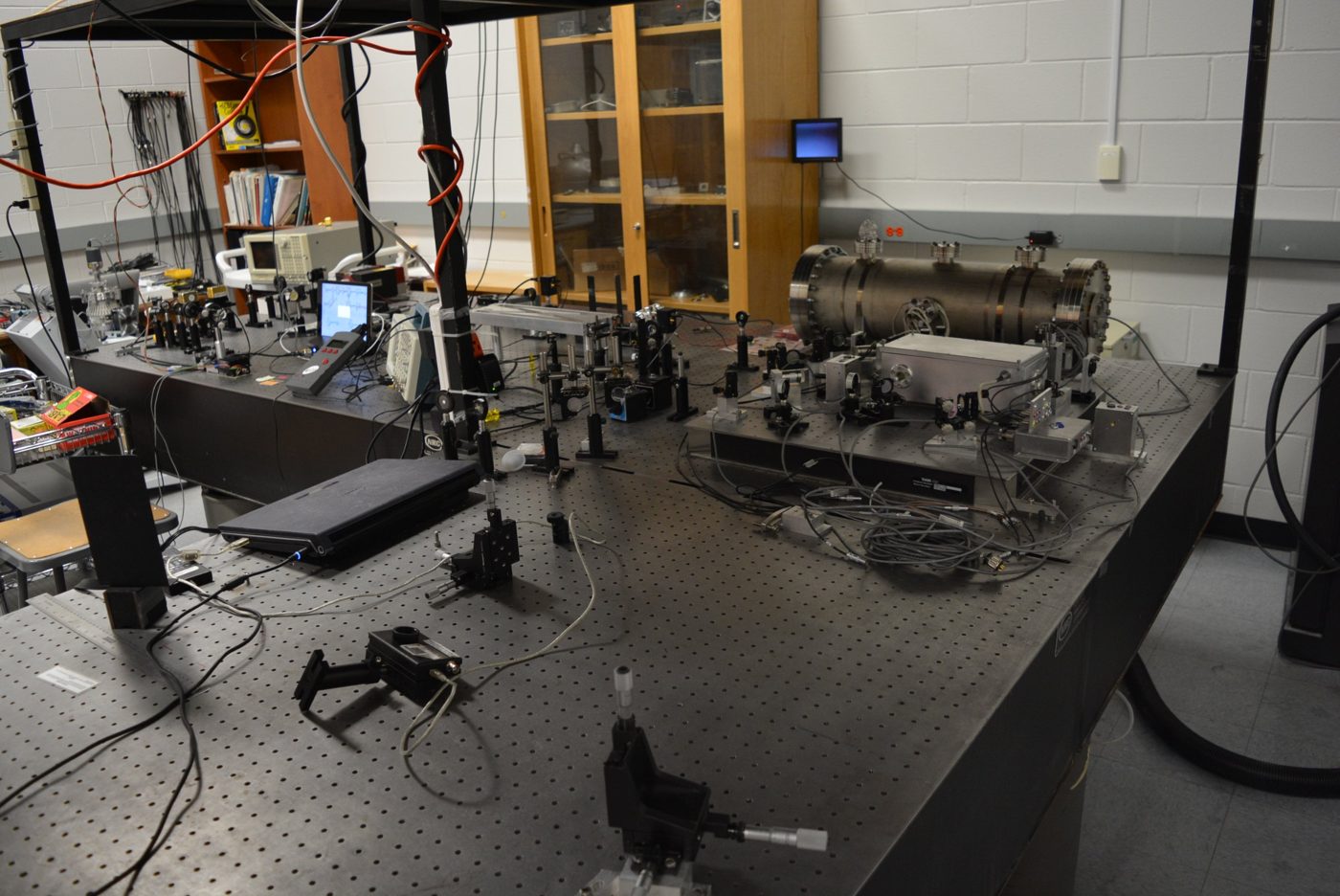
Another table I worked on: a vacuum-chamber reference cavity and the optics for a bow-tie cavity.
Industry: Southern California Edison
Test-lab engineering and lab leadership.
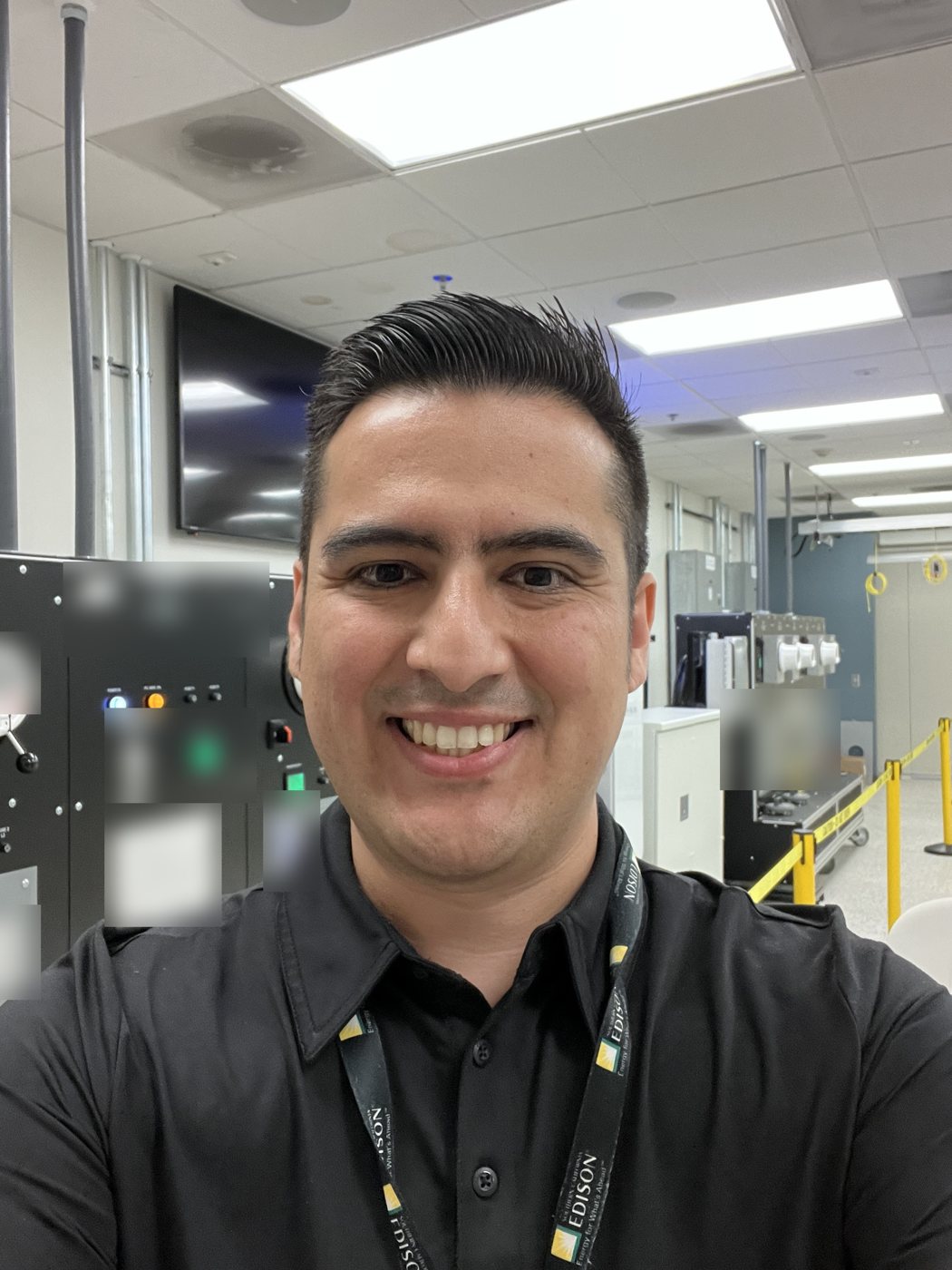
Industry era: test racks for meters and distributed-energy equipment.
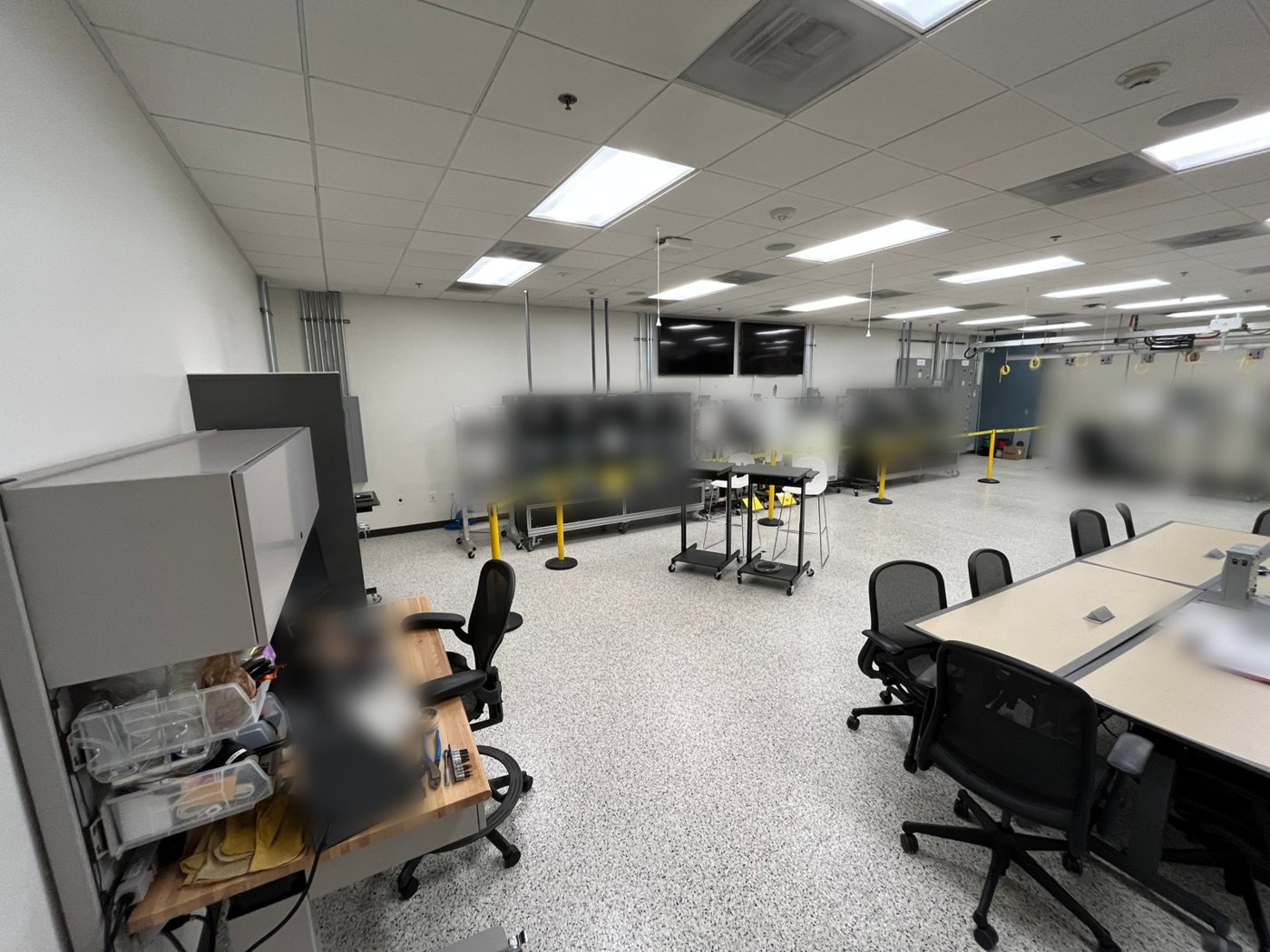
The test lab floor: meter test racks, distributed-energy equipment and work areas.
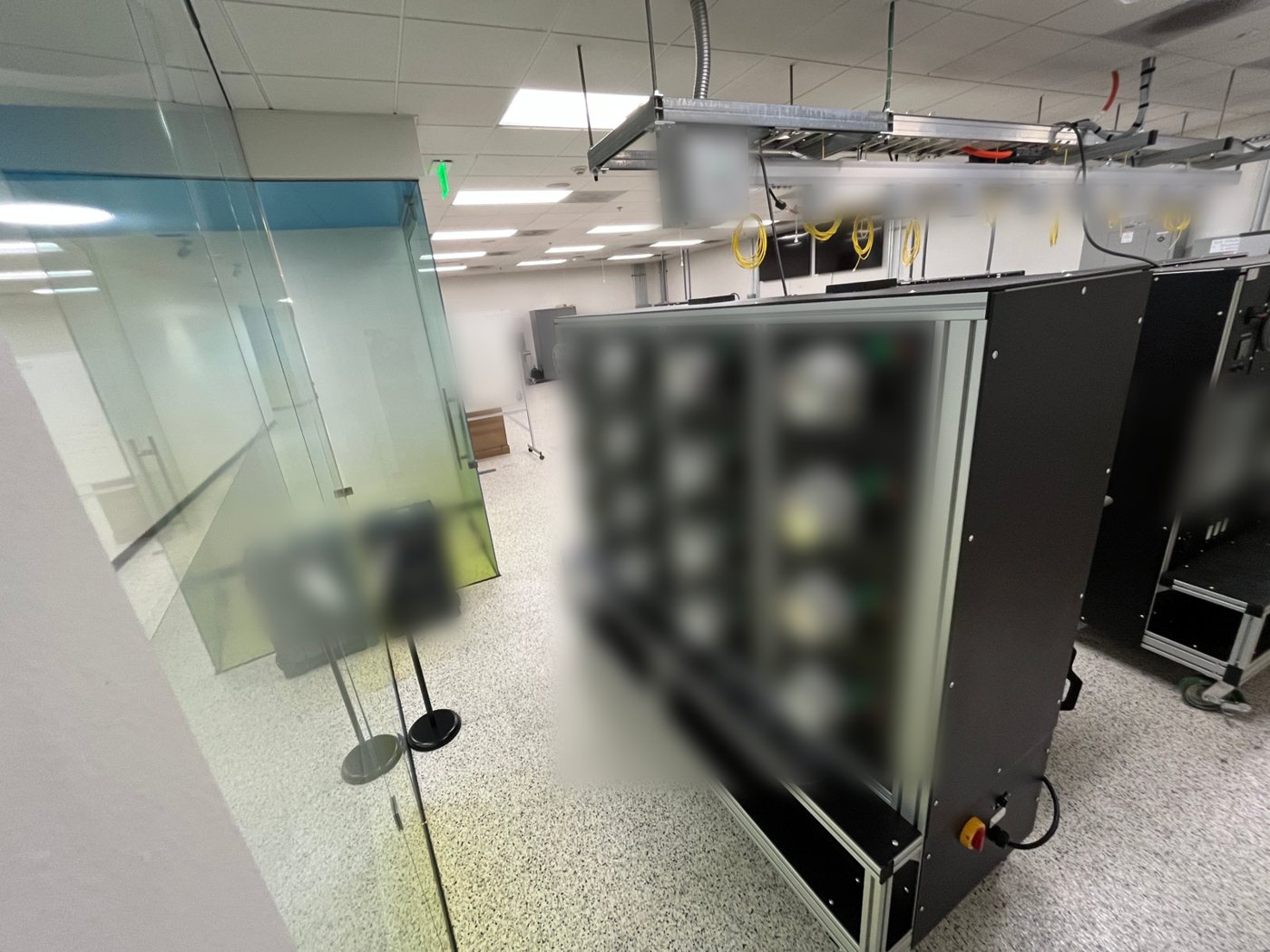
Racks of meters under test, with power fed from overhead busways.
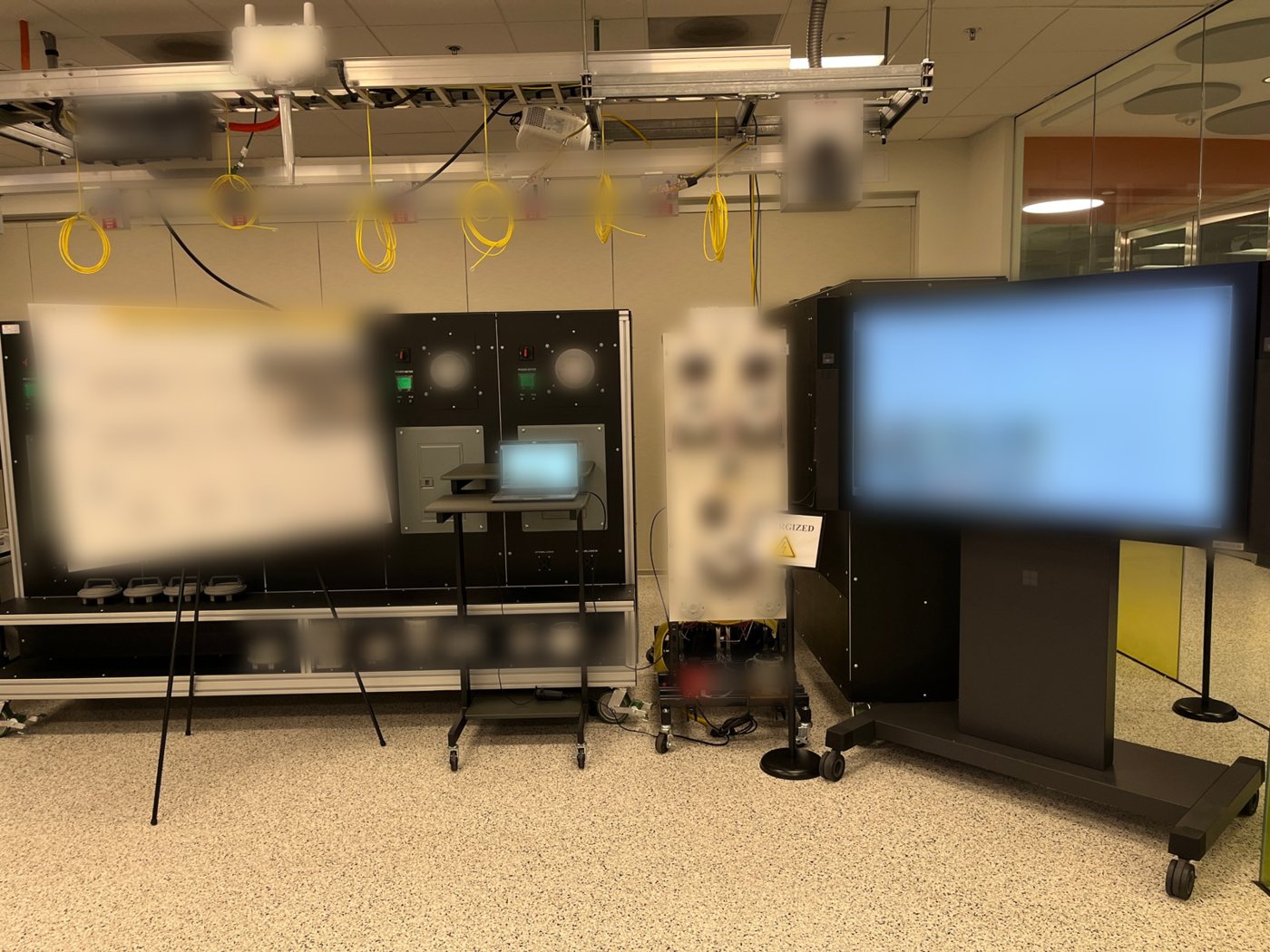
A hands-on station for showing how meters connect to the distribution network.
Building the new lab
A new optics lab, built up one experiment at a time.
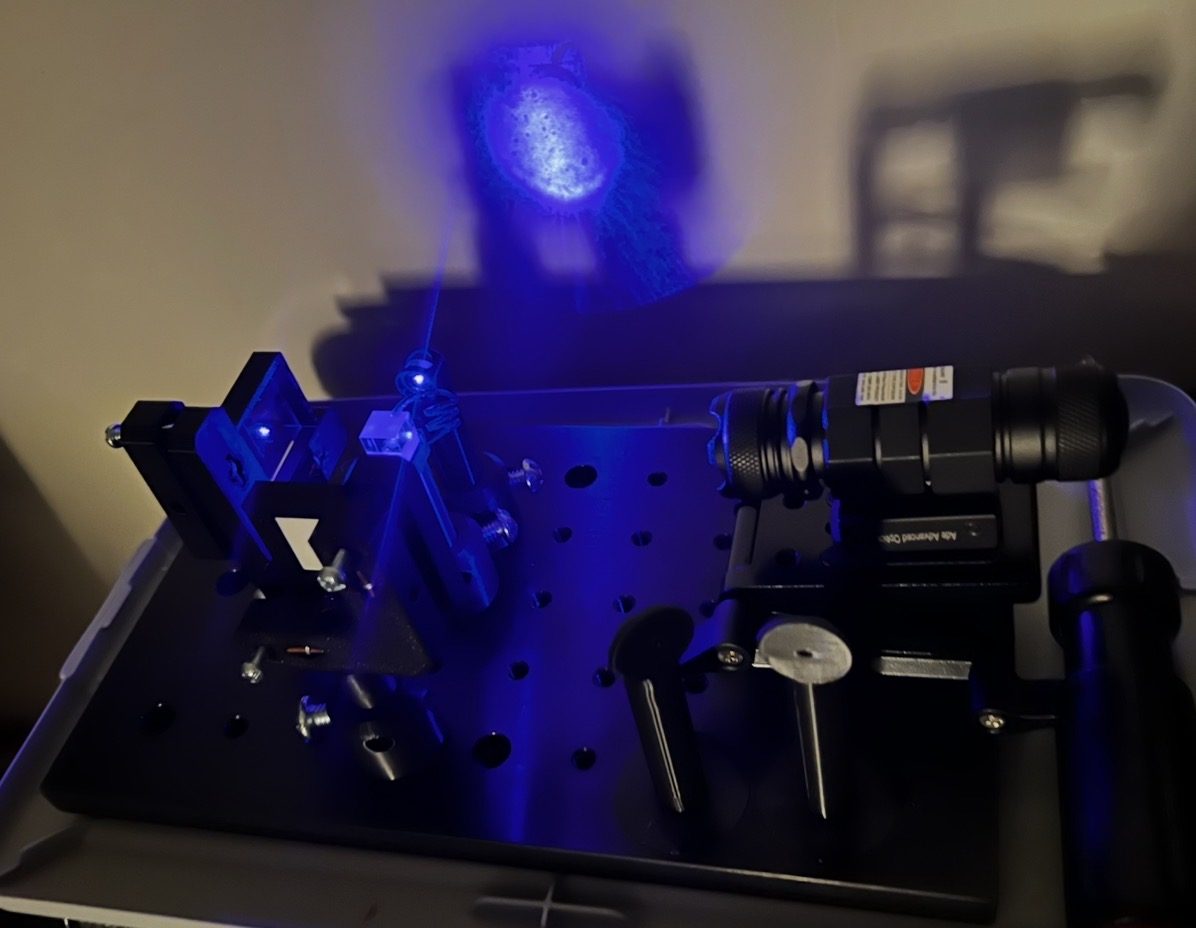
A compact Michelson on a small breadboard, its output projected onto the wall.
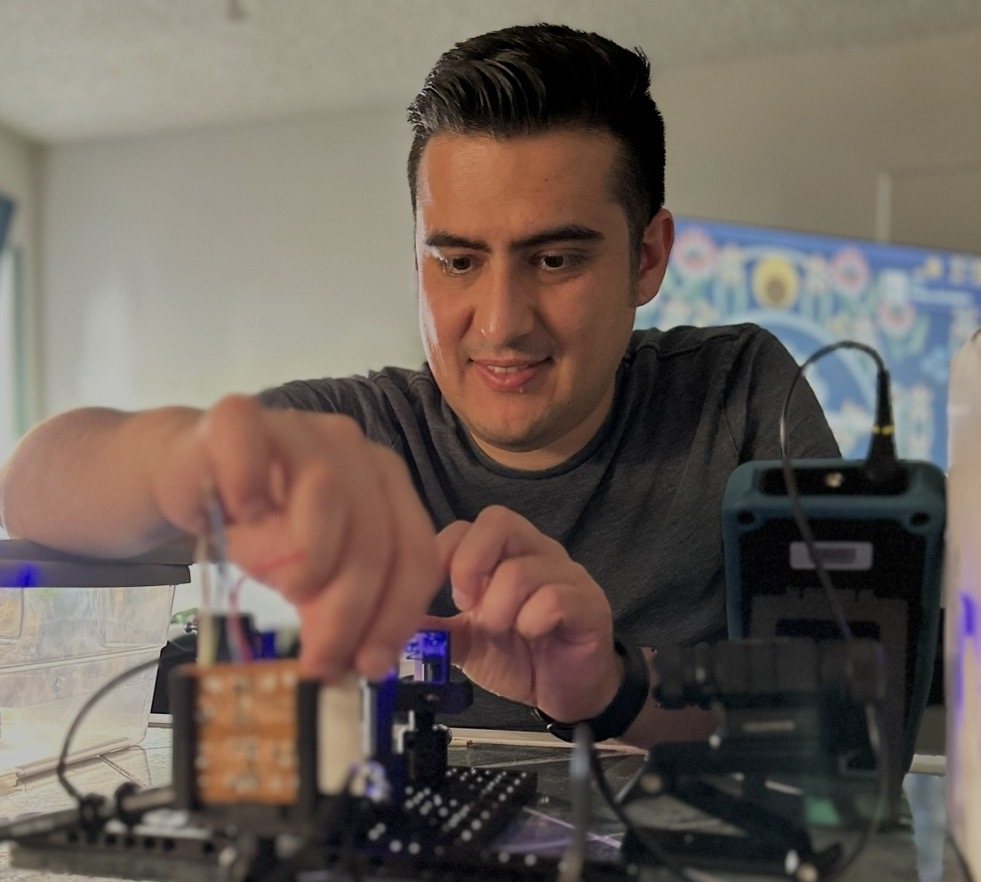
Aligning a compact blue-laser Michelson interferometer built from 3D-printed mounts.
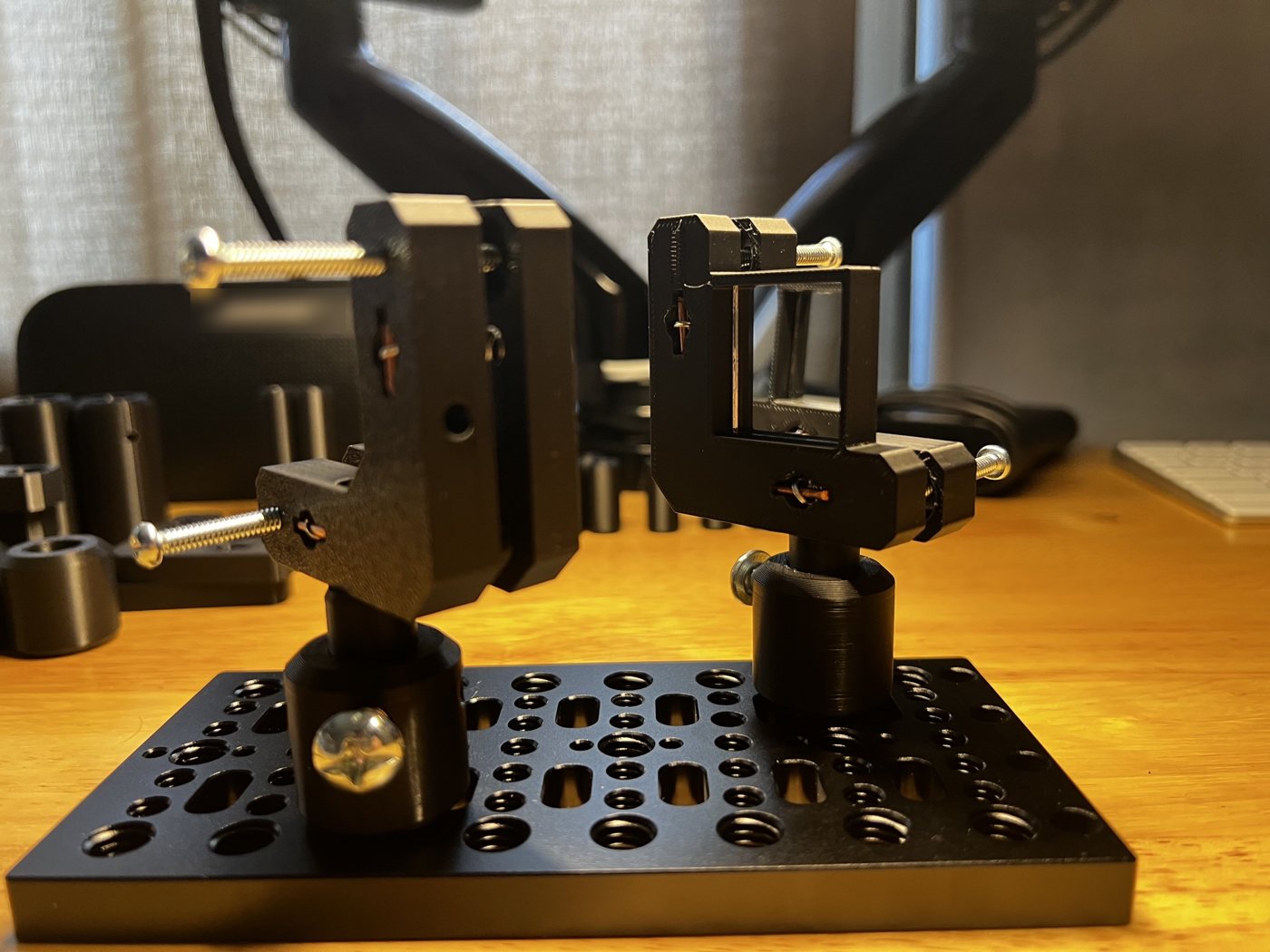
Small kinematic mirror mounts, printed in-house, with screw adjusters for tip and tilt.
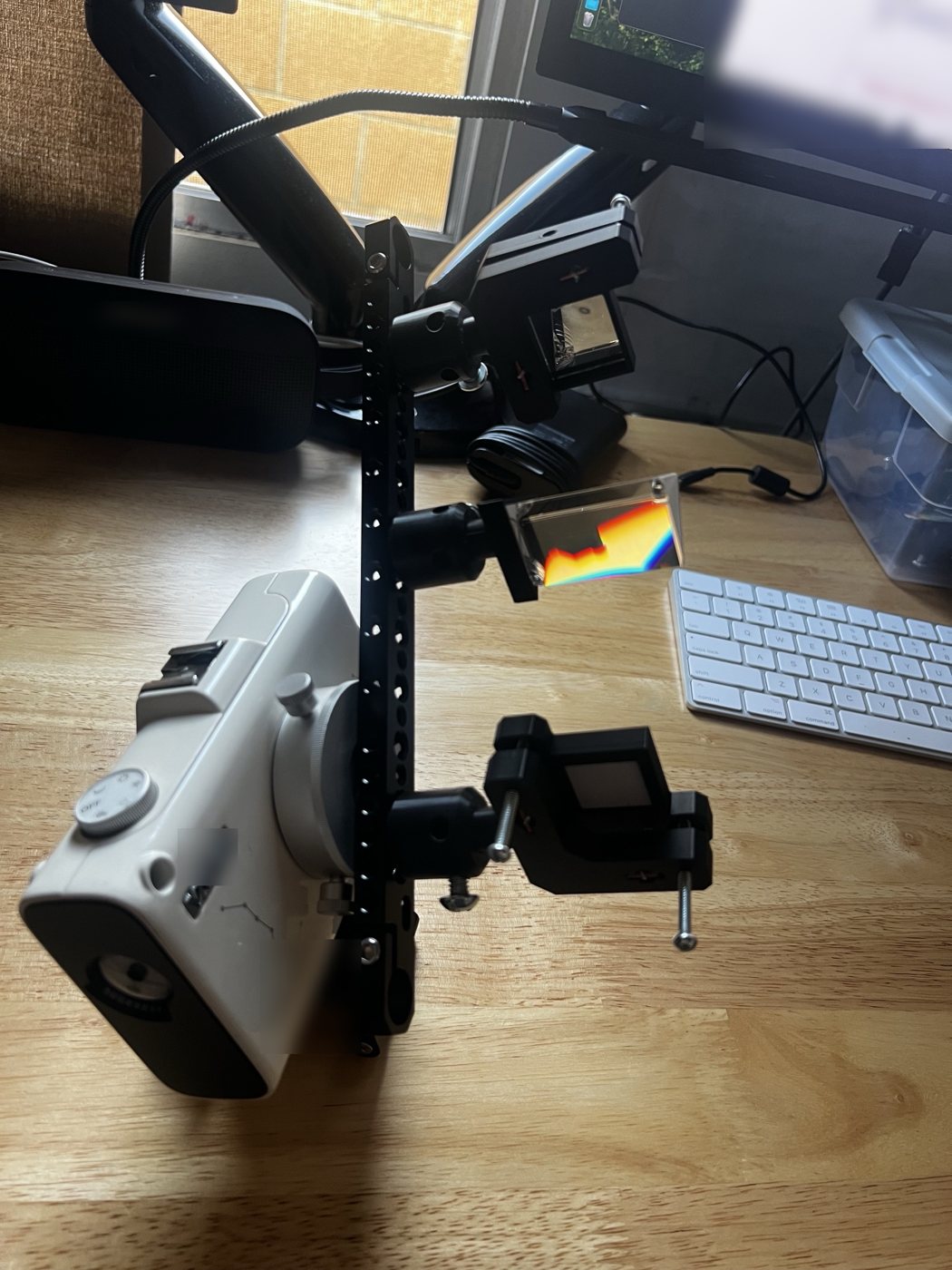
The sun-tracking prism bench: sunlight through a prism, spread into the visible spectrum. See the simulation.
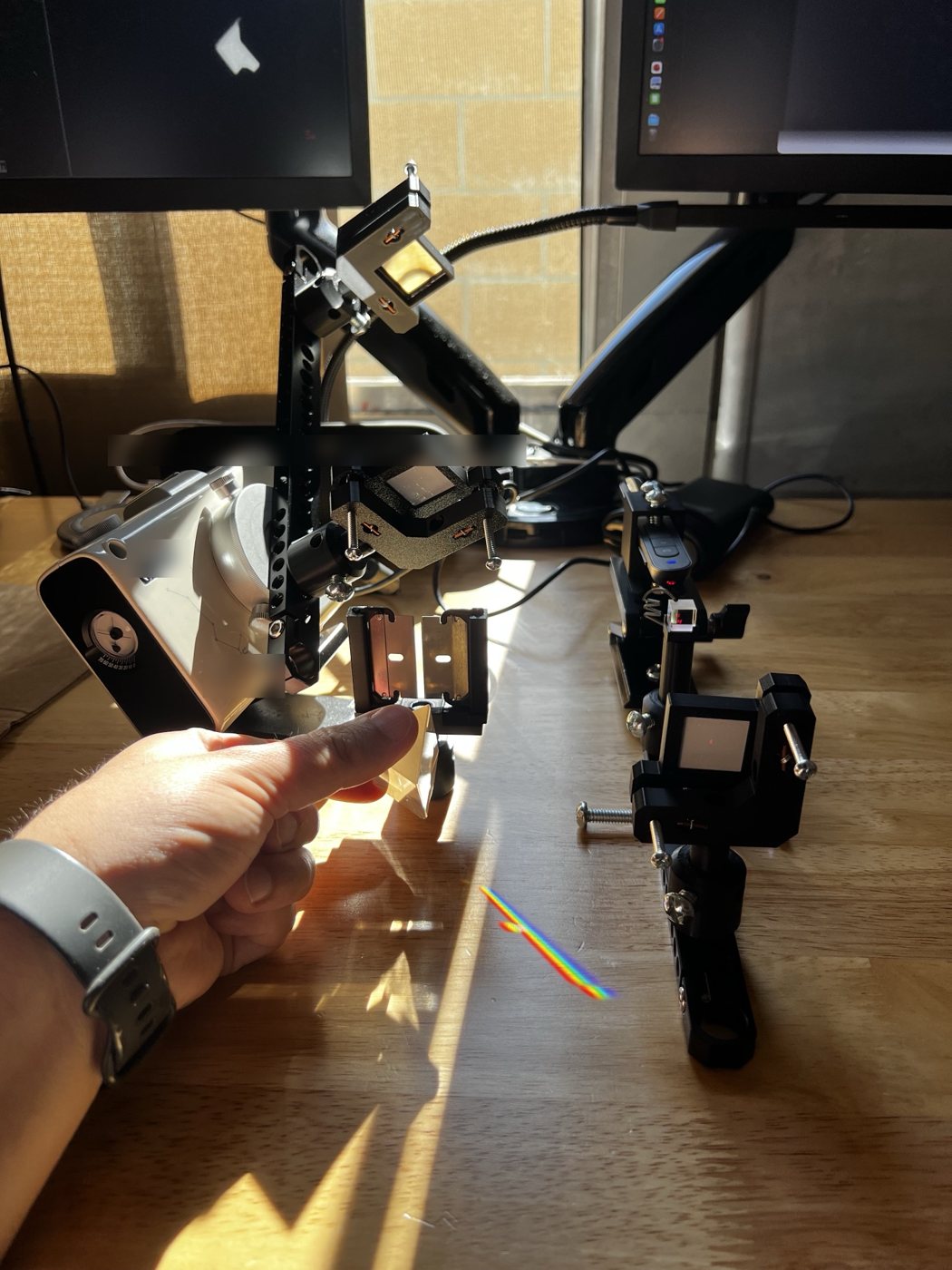
Lining up the prism by hand; the spectrum lands as a colored stripe on the table.
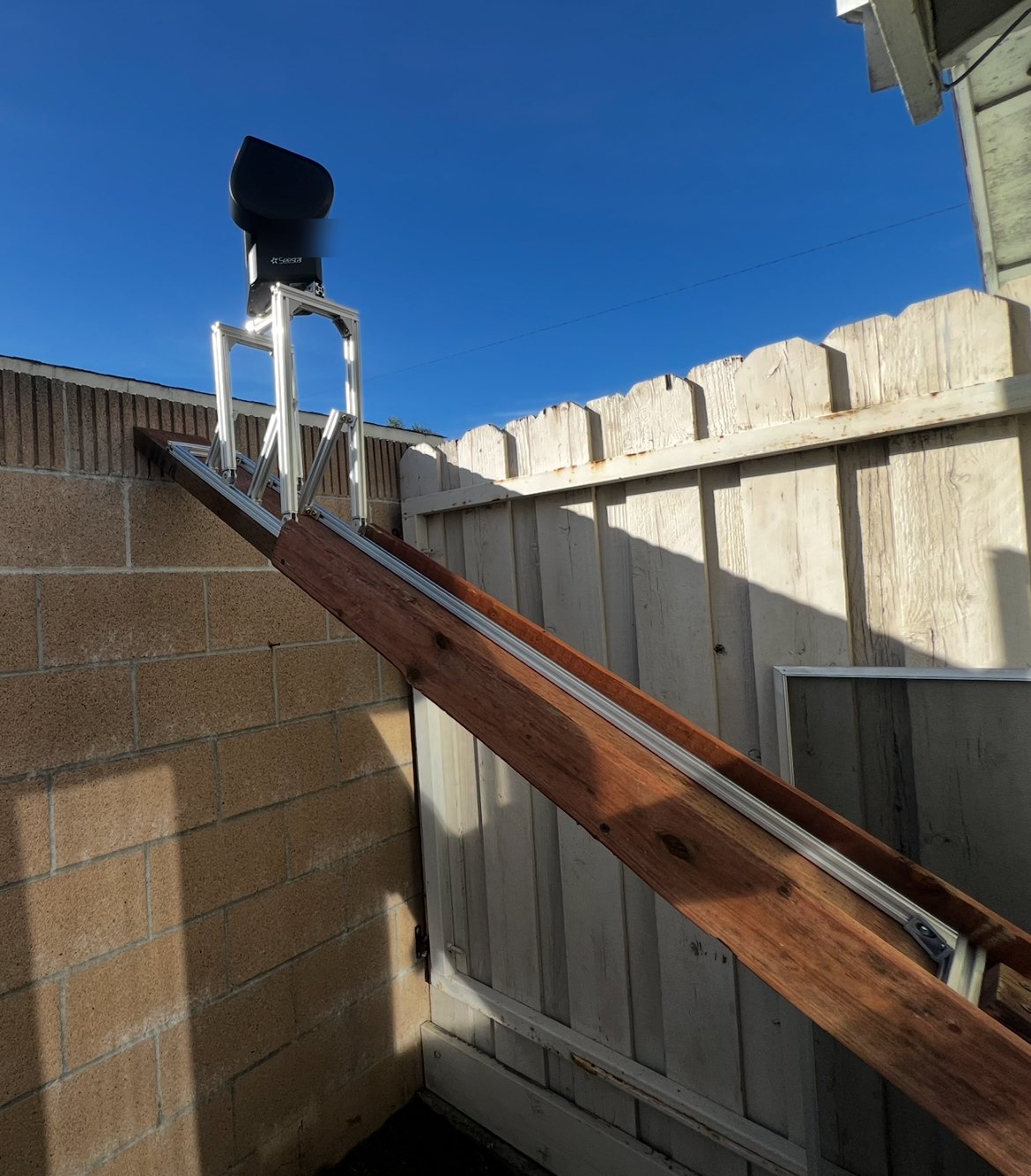
A smart telescope on an aluminum-extrusion stand that slides up a ramp to the window, so a late-night observing session takes minutes to set up.
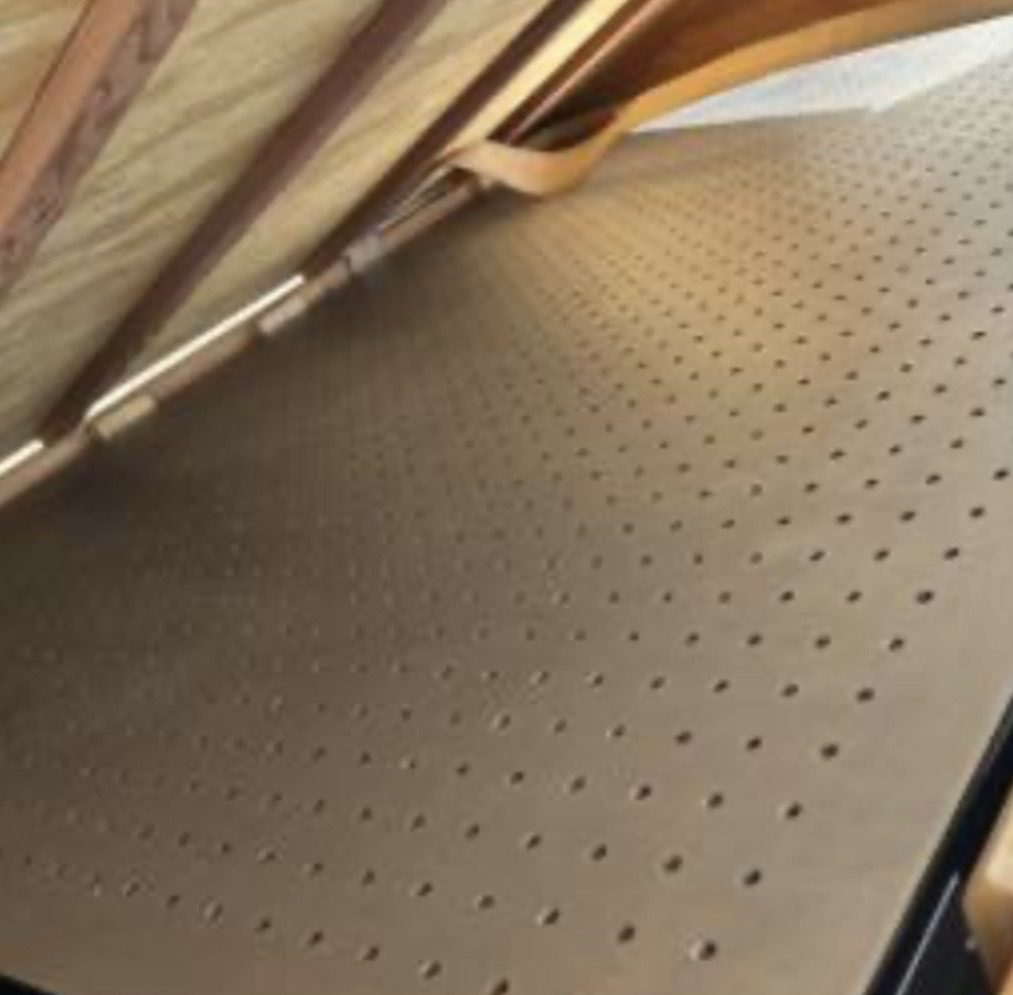
Bought for the new lab and now being set up. Each experiment built on it will be added below.
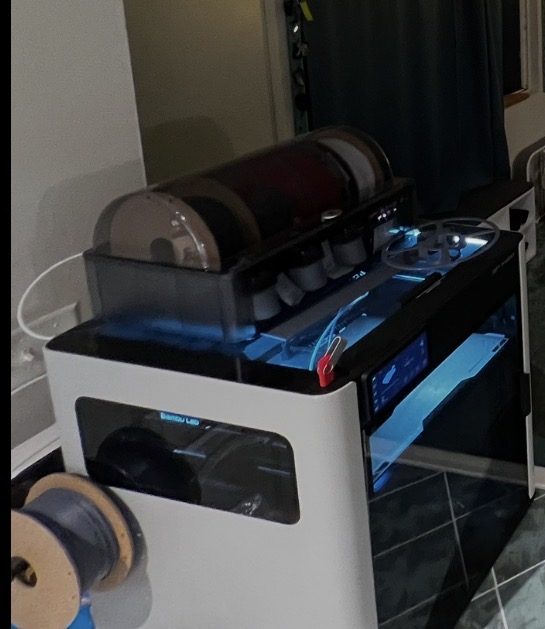
Prints the custom mounts, adapters and enclosures used across the benches.
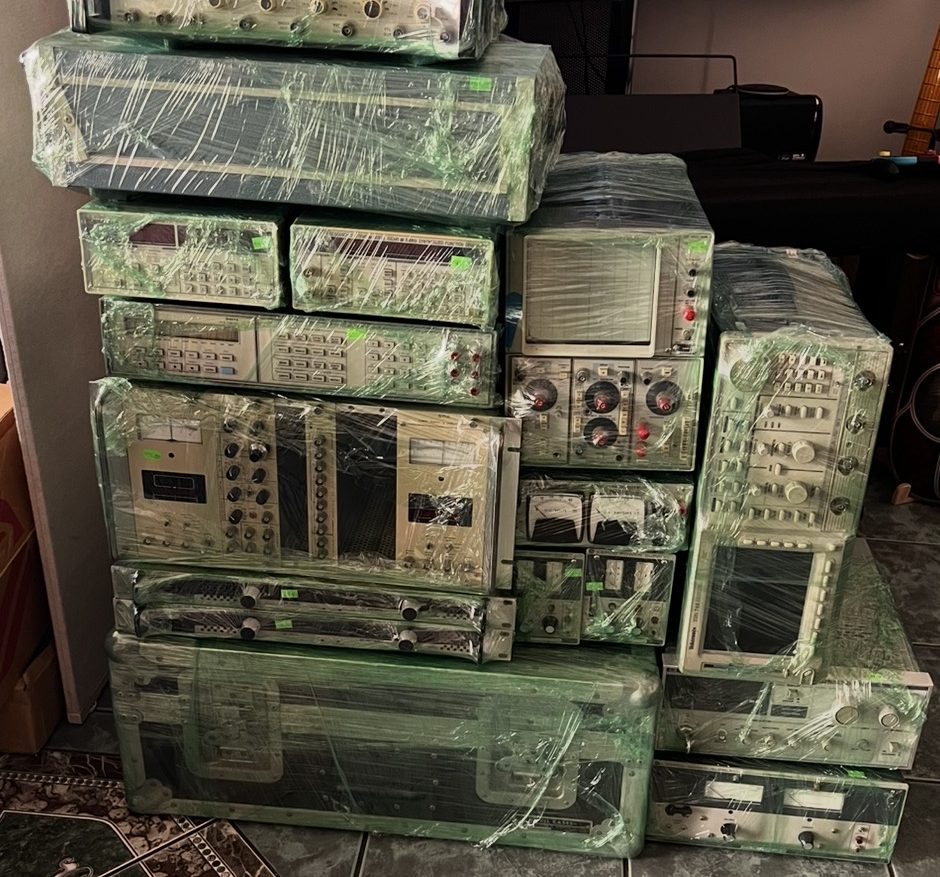
Signal generators, meters, power supplies and oscilloscopes in their transparent green wrap, to be set up over the coming year.
Build updates
A running log of what goes onto the new table.
- October 2026. Optical table in place; setup started.
- Next. First experiment on the new table, with photos.